The guide
Usually a mix of the two suits a care home best. The home's own team holds what only the home can know: its residents, its routines and the questions families ask on a tour. A specialist partner holds the craft that is hard to keep on one person's desk: filming, advertising and tracking. A home with a dedicated marketing lead and protected time can do more itself, and a home where the manager already carries the marketing usually gains most from outside help.
Updated October 2026
What to know, in brief:
In-house
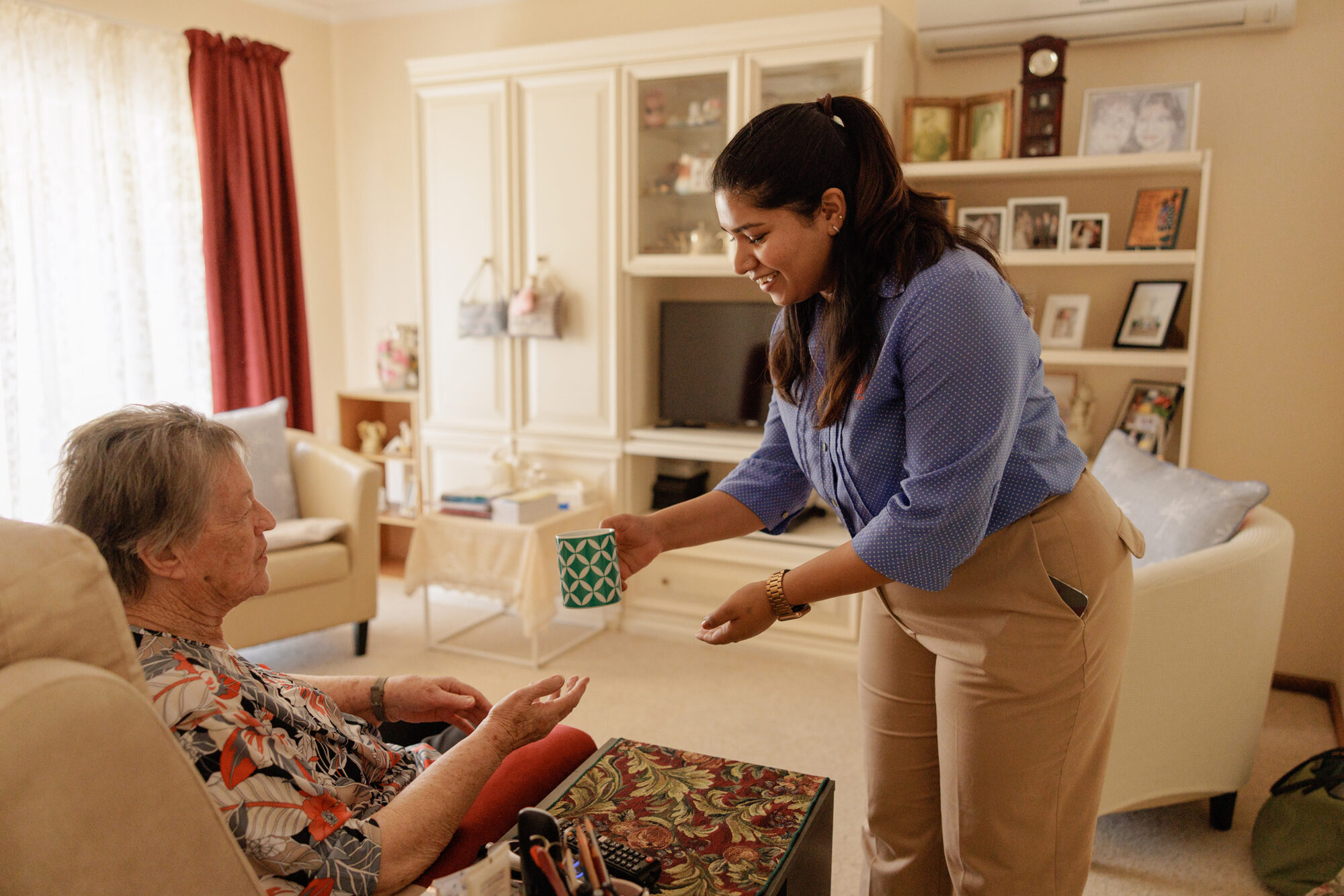
In-house marketing works from daily contact with the home. Someone on site knows the questions families ask on a tour, how the garden looks in spring and who a new resident meets first. They can reply to a review the same day and keep the Google Business Profile accurate, which matters because Mediahawk research found the profile accounts for 40% of marketing-driven phone enquiries into care homes (published November 2024).
The ceiling is range. One person, often with a care or administration role as well, is asked to plan, film, edit, write, run adverts and report, and each of those is a separate craft.
An outside partner
It brings range and repetition. It does not live in the home.
Where it reaches its limit
An agency does not hear the questions on a tour or take the calls, so it relies on the home to share what it knows and to follow up well. Without that input, the work tends to read as generic. With it, the work can be specific to the home, which is why good arrangements ask a lot of the home's team at the start.
Side by side
Each works. Each has a ceiling.
| Approach | Who does the work | What it does well | Where it reaches its limit |
|---|---|---|---|
| In-house only | The home's own team | Knows the residents, the families and the daily routine; quick to respond | One person covers many crafts, so filming, advertising and tracking are stretched |
| Agency only | An outside partner | Skill, equipment and experience from other homes; keeps going when the home is busy | Needs the home's knowledge; can read as generic without it |
| A mix | The home supplies knowledge, a partner supplies production and tracking | Specific to the home and professionally made | Needs a named person in the home and clear agreement on who does what |
The numbers
Arranging care is hard, and families look around before they ring. Care England and Log my Care asked 1,000 people responsible for arranging care for a family member how they found it and where they looked. Mediahawk's spring 2026 report adds that the visitor-to-call ratio fell 7.5%, so more people look before they call.
The routes add up to more than 100% because people named more than one, and the sample covers people arranging different kinds of care, so read them as a guide to behaviour. Sources: Care England and Log my Care, 29 April 2026 and Mediahawk via Care England, June 2026.
Who it suits
It depends on who already carries the marketing.
A named marketing person with protected time and a team comfortable on camera can run more in-house. A partner then helps with the jobs that need specialist skill or equipment, such as a filming day or setting up advertising.
Where the manager or administrator fits marketing around everything else, outside help usually gives the most back. The partner takes on planning, production and reporting, while the home supplies knowledge, introductions and consent.
A group often needs both: a central lead who sets the standard, and each home's team supplying what is true of that home. Our guide to how a group can market several homes goes through this.
Deciding
Four steps, in this order.
Planning, filming, writing, advertising, the website, answering enquiries and tracking. Write each down so you can see how many there are.
Answering the phone, knowing the residents, hosting visits and giving consent for anyone who appears. These stay with the home.
For each remaining job, ask whether someone has both the hours and the experience. Where either is missing, a partner helps.
Ask any partner how fees work, who controls the ad budget and how they review enquiries with your team.
Where we fit
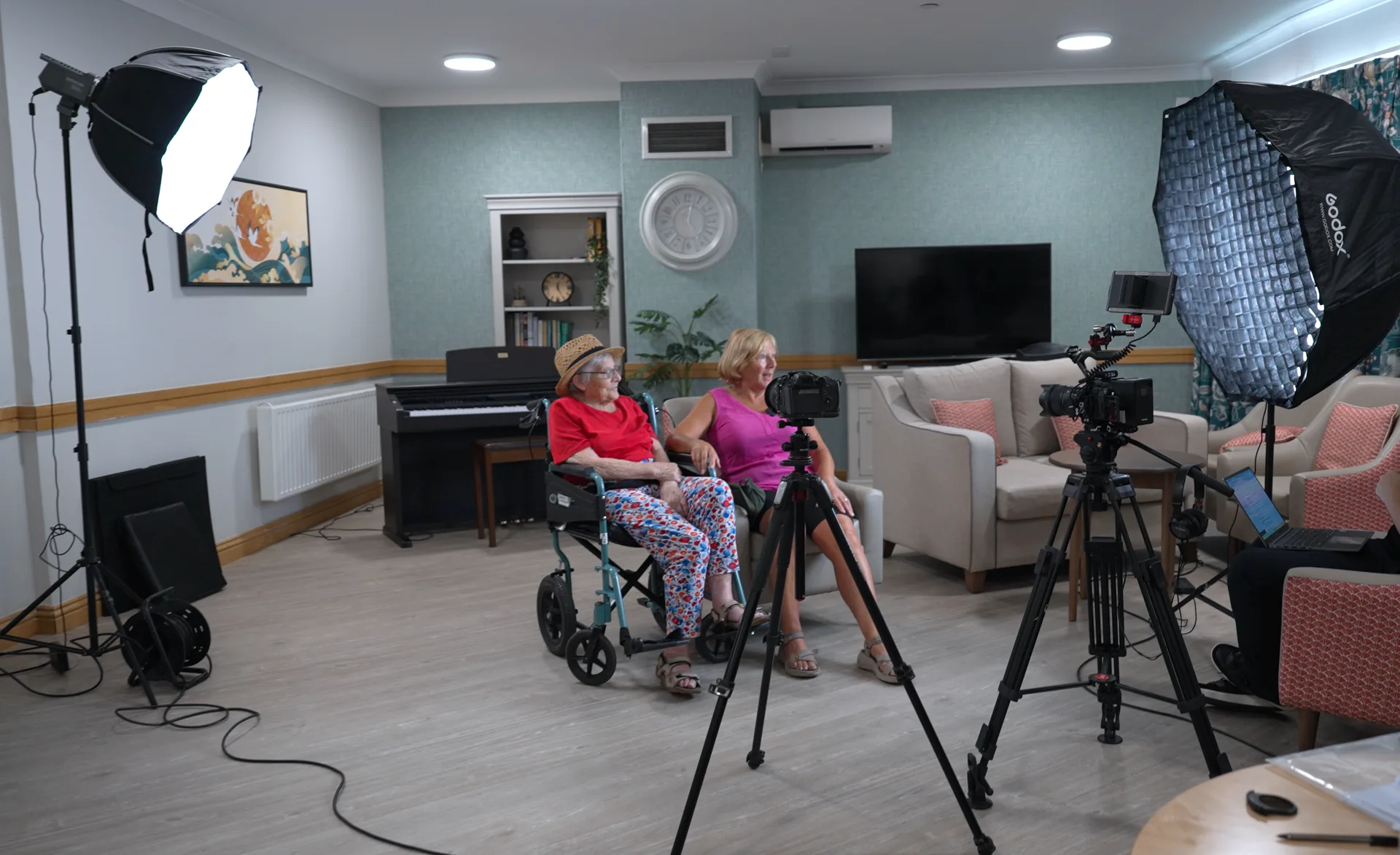
Heritage makes family-story films, manager films and daily-life footage in one shoot day at the home, along with photographs, and the home keeps them. They are real people, never actors and never AI, with consent handled for everyone who appears. The content runs in Meta campaigns aimed at families in the surrounding area, with an enquiry page built alongside. The home controls its own ad budget, the work is framed as results, not retainers, and the fee is tied to a resident moving in. The specifics are walked through on a call.
To weigh up a partner, start with how to choose a care home marketing agency and what to expect from one. For how the fees can be structured, see results or retainer pricing.
Common questions
Neither is better for every home. In-house marketing knows the home, the residents and the families, but one person is asked to cover planning, filming, writing, advertising and reporting. An agency brings those skills and experience from other homes, but depends on the home to share what it knows. Many homes do best with a mix: the home supplies the knowledge and a partner takes on the production and tracking.
Yes, and it is a common way to split the work. The home usually keeps what only it can do, such as answering calls, hosting visits and giving consent for anyone who appears on film, while a partner takes on jobs that need specialist skill or equipment, such as a filming day, advert set-up and tracking.
It needs the home's knowledge and a named person to work with. That means the questions families ask on a tour, the reasons families chose the home, introductions to residents and relatives who are happy to take part, consent arrangements, and feedback on how enquiries went. Work done without that input tends to be generic.
Usually the home's own team. A family's first conversation is with the people who know the residents and the daily routine, and that is difficult for an outside team to replace. The marketing's job is to give interested families a clear route to contact your team, and to learn from your team afterwards what happened next.
Look at what happens after the enquiry, not only the number of enquiries. Ask each caller how they first heard of the home, record the last step they took as well, and review it monthly with the people who take the calls, alongside visits and move-ins. Our guide to where care home enquiries come from sets out a simple way to do this.